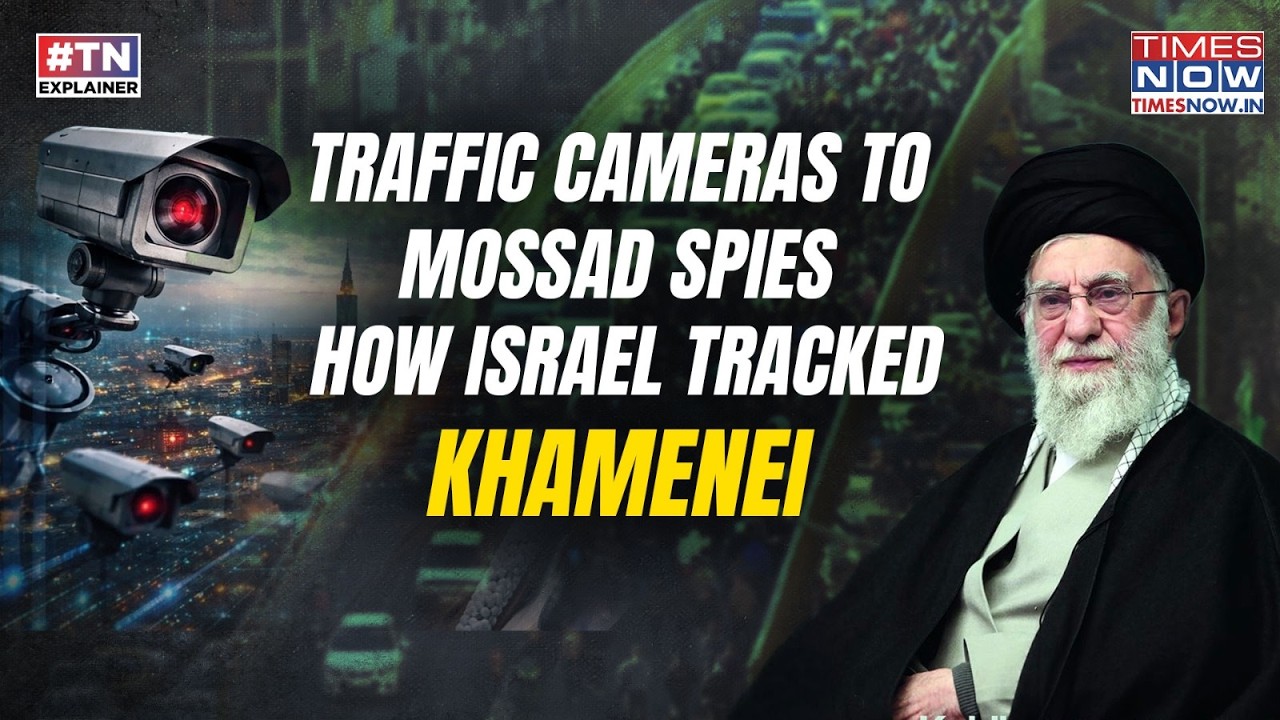
Mossad's Digital Eye: Hacking Tehran Traffic Cameras for Targets
In the complex shadow world of international espionage, where every pixel and every packet of data holds potential strategic value, the revelation of a sophisticated operation involving **hacked traffic cameras** in Tehran stands out as a testament to the audacious ingenuity of modern intelligence agencies. For years, Israel's Mossad, reportedly with coordination from the United States, allegedly turned Tehran’s extensive urban surveillance network against its own creators, transforming street-level cameras into critical assets for tracking, mapping, and ultimately, targeting high-value Iranian officials. This wasn't just a simple hack; it was a multi-year deep penetration that redefined urban intelligence gathering.
The Invisible Lens: How Hacked Traffic Cameras Transformed Urban Surveillance
The initial breach into Tehran’s traffic camera network was not a fleeting exploit but a deliberate, long-term endeavor stretching back years. Once compromised, these cameras offered a real-time, ground-level perspective of an enemy capital, providing an unparalleled vantage point into the city's arteries and veins. This unprecedented access allowed Israeli intelligence to meticulously map Tehran in intricate detail, observing the daily ebb and flow of traffic, identifying critical routes, and understanding the urban landscape with an intimate familiarity previously unattainable without a massive physical presence.
Imagine an intelligence agency gaining the ability to see the pulse of a city, not from high-altitude satellite imagery alone, but from thousands of perspectives at street level. This "digital eye" enabled analysts to establish nuanced patterns of movement for specific vehicles and individuals, a crucial first step in building comprehensive intelligence profiles. The urban infrastructure, intended by Iran for its own state surveillance and control, was skillfully co-opted, becoming a powerful tool against the regime it was designed to protect. This highlights a critical vulnerability in the increasingly interconnected "smart city" ecosystems around the globe: any network designed for public monitoring can, if unsecured, become a conduit for clandestine observation by hostile actors.
Beyond Pixels: Building a "Pattern of Life" for High-Value Targets
The true power of the **hacked traffic cameras** lay not just in mapping the city, but in their ability to facilitate the creation of detailed "patterns of life" for key individuals within Iran's inner circles, including the security details of Supreme Leader Ayatollah Ali Khamenei. By observing specific cameras, such as one strategically angled to show where Khamenei's security team parked their cars, intelligence analysts could piece together an astonishing amount of personal and professional data.
This included identifying specific bodyguards, tracking their daily routines, understanding their work schedules, and even discerning who they were assigned to protect. Over time, these observations allowed for the compilation of extensive files on individuals: their addresses, typical routes, meeting points, and interaction patterns. This meticulous surveillance was decades in the making, building a mosaic of intelligence pixel by pixel, observation by observation. The scale of information amassed was immense, requiring advanced methods to sort, categorize, and analyze. The ability to identify a single thing out of place, as one Israeli official put it, becomes profound when you "know Tehran like you know Jerusalem," or "the street you grew up on." This deep understanding is what transforms raw data into actionable intelligence. For more detailed insights into this aspect, consider exploring how these
Hacked Cameras Mapped Iran's Inner Circles.
The Synergy of Surveillance: Integrating Digital Feeds with Global Intelligence
The visual intelligence gleaned from the **hacked traffic cameras** was never an isolated data stream. It formed just one critical component within a much larger, incredibly complex intelligence apparatus. This sophisticated system integrated diverse intelligence disciplines, creating a comprehensive, multi-layered picture of operations within Iran.
Alongside the visual feeds from compromised cameras, Israeli intelligence fused information from human intelligence (HUMINT), signals intelligence (SIGINT), intercepted communications, and satellite imagery. This colossal quantity of raw data – from digital video feeds to intercepted radio waves – required powerful computers and cutting-edge artificial intelligence (AI) tools and algorithms to process, sort, and analyze. These advanced systems were designed to sift through mountains of information, identify anomalies, detect emerging patterns, and ultimately draw out what Israel wanted: pinpoint locations in the form of precise 14-digit grid coordinates for potential targets.
The development and ongoing operation of this system required a dedicated team of experts: technologists to manage the networks, data analysts to interpret the processed information, and engineers to fine-tune the algorithms and ensure data integrity. Furthermore, human intelligence analysts played a crucial role in validating strike recommendations, cross-referencing AI outputs with traditional intelligence to prevent errors and confirm target identities. This fusion of human expertise with machine efficiency represents the zenith of modern intelligence gathering, transforming seemingly disparate pieces of information into cohesive, actionable insights. To delve deeper into the technological advancements driving these operations, read more about
AI & Surveillance: Israel's Strategic Edge in Tehran Operations.
Strategic Implications and the Future of Digital Espionage
The alleged use of **hacked traffic cameras** by Mossad highlights several profound strategic implications for both offensive intelligence operations and defensive national security. For Israel, this system has proven its efficacy repeatedly, contributing to a longstanding and deep penetration of Iran’s inner circles, enabling operations that have reportedly led to the assassination of scores of Iranian officials, including high-ranking military officers. The use of such capabilities was even reportedly unleashed in the opening strike of a significant conflict in June last year, demonstrating its integration into front-line military strategy.
Beyond merely identifying targets, the depth of this infiltration allowed for tactical enhancements, such as the reported disruption of cellular service on Tehran’s Pasteur Street during a critical operation. This specific maneuver would have severely hampered communication for bodyguards, preventing warnings from reaching their principals and demonstrating a holistic approach to operational execution – not just finding targets, but ensuring conditions were optimal for a successful strike.
This saga serves as a stark reminder of the evolving landscape of espionage, where the mundane infrastructure of urban life – traffic cameras, telecommunications networks – becomes a primary battleground. For nations worldwide, it underscores the critical importance of robust cybersecurity measures for all public and private infrastructure, especially those connected to the internet or providing sensitive visual data. The "Internet of Things" (IoT) presents a double-edged sword: convenience and efficiency on one side, but vast new attack surfaces for state-sponsored actors on the other. Securing these systems is no longer just an IT concern; it's a matter of national security.
The future of digital espionage will undoubtedly see a continued reliance on such deep penetrations, leveraging AI and big data analytics to extract intelligence from the ever-growing digital footprint of societies. The ability to "know" an enemy capital as intimately as one's own backyard offers an asymmetric advantage that will continue to shape covert operations for decades to come.
The alleged sophisticated operation involving **hacked traffic cameras** in Tehran provides a chilling insight into the cutting-edge tactics employed by modern intelligence agencies. It illustrates how readily available urban technology, when compromised and integrated into a vast intelligence framework, can become a pivotal tool for strategic advantage. This wasn't merely about gaining access to a few cameras; it was about transforming an entire city's public surveillance network into an integral component of a meticulously planned, algorithm-driven intelligence machine. As technology continues to advance, the digital eye of espionage will only grow sharper, making the security of our interconnected world a paramount challenge for every nation.