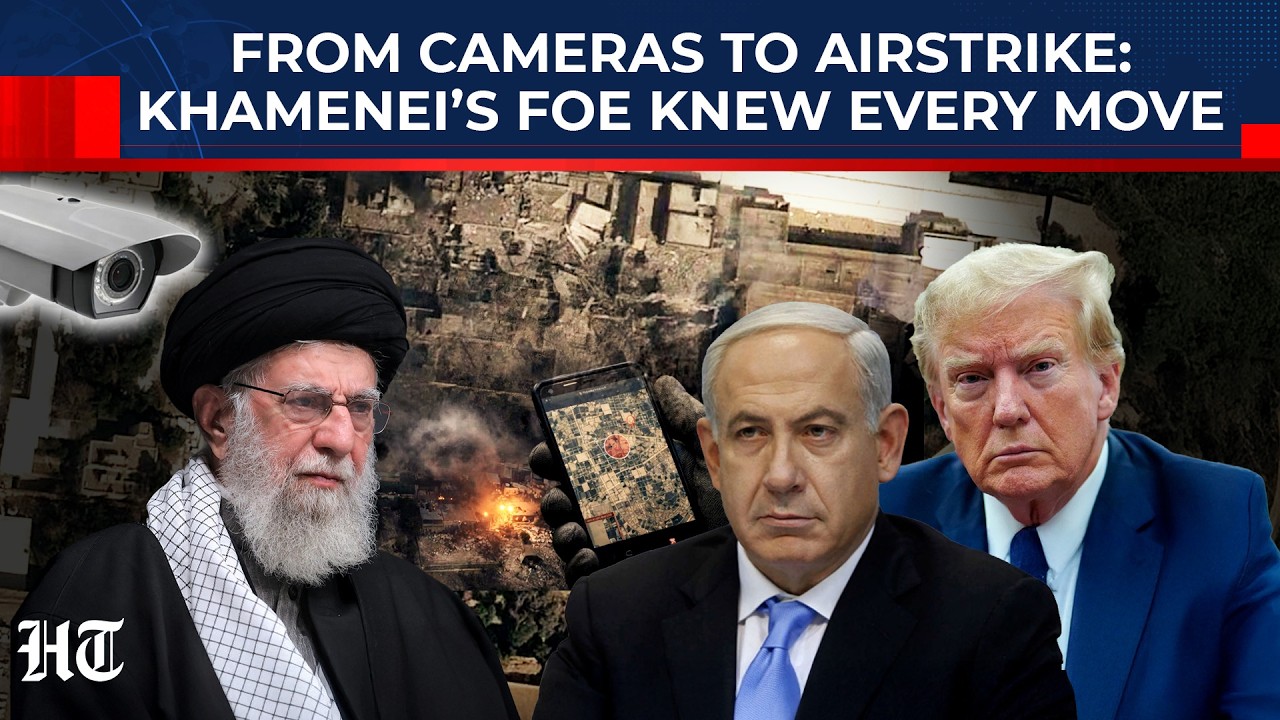
The bustling streets of Tehran, typically a scene of ordinary urban life, once held a deeply hidden secret: their extensive network of traffic cameras, installed by the state ostensibly for managing congestion and monitoring dissent, had been secretly co-opted. Not by internal dissidents, but by a formidable external intelligence apparatus. This stunning revelation exposed how a sophisticated intelligence operation, leveraging seemingly innocuous hacked traffic cameras, peeled back layers of secrecy to map the inner circles of Iran's leadership, including the movements of Ayatollah Ali Khamenei's security detail.
This wasn't a mere act of cyber vandalism. It was a calculated, multi-year strategic endeavor by Israeli intelligence, reportedly with coordination from the United States, that transformed Tehran's surveillance infrastructure into a powerful tool for adversary intelligence. The audacious operation provided real-time visual intelligence, creating an unparalleled "pattern of life" profile for high-value targets within Iran's capital.
The Digital Lens: How Hacked Traffic Cameras Unveiled Tehran's Secrets
For years, a silent digital invasion was underway. Israeli intelligence, specifically elements like Mossad and the elite Unit 8200, gained unauthorized access to Tehran's vast network of traffic cameras. These aren't just simple CCTVs; many are integrated into a larger state surveillance apparatus, offering high-resolution feeds and sometimes even facial recognition capabilities. The initial breach itself would have required significant expertise, likely exploiting vulnerabilities in network security, supply chain weaknesses, or a sophisticated social engineering campaign against system administrators.
Once compromised, these hacked traffic cameras became invaluable eyes on the ground. They allowed analysts to literally map the city, observing traffic flow, identifying key routes, and meticulously documenting the daily routines of individuals. Imagine watching a continuous stream of an enemy capital, noting every pattern: which cars travel together, where they stop, what buildings they enter, and at what times. This was the raw data for building intricate "pattern of life" profiles.
A particularly telling detail from reports highlighted one specific camera's angle: it inadvertently revealed where members of Khamenei's security team regularly parked their vehicles. This seemingly minor observation unlocked a treasure trove of information. From these parking spots, intelligence operatives could deduce departure and arrival times, track specific vehicles, and even potentially cross-reference with other data to identify the guards themselves. Over time, this cumulative visual intelligence allowed them to build comprehensive files on guards' addresses, work schedules, and who they were assigned to protect, offering an unprecedented look into the supreme leader's protective bubble.
Beyond the Lens: Fusing Intelligence for a Complete Picture
While the hacked traffic cameras provided a crucial visual layer, they were merely one component of a far more intricate and expansive intelligence system. This wasn't a singular hack; it was a symphony of intelligence gathering, a meticulous process of data fusion designed to create an almost omniscient understanding of Iran's inner workings. The cameras provided the "what" and "where" in real-time, but other streams added the "who," "why," and "how."
- Visual Intelligence (VISINT): Beyond the traffic cameras, this would include satellite imagery, aerial reconnaissance, and possibly even covert human-operated cameras, offering broader contextual views and strategic overviews.
- Human Intelligence (HUMINT): Agents on the ground, informants, and defectors would provide crucial context, verifying visual data, identifying individuals, and offering insights into motivations and internal dynamics that cameras alone could not capture.
- Signals Intelligence (SIGINT): Intercepted communications—be it phone calls, emails, encrypted messages, or even radio frequencies used by security details—provided direct insights into plans, movements, and command structures. This is where Unit 8200, known for its SIGINT prowess, would play a critical role.
- Open Source Intelligence (OSINT): Publicly available information, from state media to social media, could be mined for contextual clues, confirming locations, identifying personnel, and understanding political narratives.
The sheer quantity of this disparate information was staggering. It required powerful computing resources to process, sort, and analyze. The goal was to connect the dots between a vehicle seen on a hacked traffic camera, a name mentioned in an intercepted conversation, and a face identified in satellite imagery. As one Israeli official famously stated, "We knew Tehran like we know Jerusalem... And when you know [a place] as well as you know the street you grew up on, you notice a single thing that’s out of place." This profound familiarity, born from fused intelligence, allowed them to detect anomalies that would indicate significant activity or a deviation from routine.
AI and the Algorithm: The Brains Behind the Operation
In the age of big data, human analysts alone simply cannot cope with the deluge of information generated by such a comprehensive intelligence operation. This is where advanced artificial intelligence (AI) tools and sophisticated algorithms stepped in as the brains behind the system. The Israeli intelligence community developed these tools specifically to sift through mountains of data, identifying patterns, flagging anomalies, and correlating seemingly unrelated pieces of information that would be invisible to the human eye.
This process of "algorithm-driven targeting" meant that AI could track specific vehicles, detect changes in security formations, and even predict potential future movements based on established patterns. The goal was not just to observe, but to anticipate. A specialized team of technologists, data analysts, and engineers worked tirelessly to build, refine, and validate the strike recommendations generated by these AI systems. This human oversight was critical, ensuring that algorithmic outputs were cross-referenced with human intelligence and real-world understanding to prevent errors.
The output of this high-tech fusion was incredibly precise: a "pinpoint location in the form of a 14-digit grid coordinate," ready for actionable intelligence. This level of precision allowed for highly targeted operations. On one reported occasion, during an operation on Tehran's Pasteur Street, cellular service was disrupted. This tactical maneuver was likely designed to create "busy signals" for anyone attempting to warn targets or their bodyguards, isolating them in a critical window. The integration of AI and surveillance capabilities transformed raw data into actionable intelligence, providing Israel with a strategic edge in critical operations.
Implications and the New Era of Digital Espionage
The story of the hacked traffic cameras in Tehran is more than just an impressive intelligence feat; it underscores a profound shift in modern espionage and warfare. This "longstanding penetration of Iran's inner circles" has demonstrably enabled highly sensitive and successful operations. For instance, the same capabilities were reportedly unleashed in the opening strike of a "12-day war" between Israel and Iran, leading to the assassination of Iran's highest-ranking military officer, the head of its elite Islamic Revolutionary Guard Corps. This showcases the system's proven effectiveness and its direct impact on geopolitical dynamics.
The implications are far-reaching, particularly for national security and critical infrastructure protection:
- Pervasive Vulnerability: The extensive reliance on interconnected digital infrastructure, from traffic cameras to smart grids, creates a vast attack surface. Any nation's critical infrastructure can become a target for sophisticated state-sponsored actors.
- The Power of Data Fusion: Modern intelligence is less about a single "spy" and more about the seamless integration of diverse data streams, processed by advanced analytics and AI. This multidisciplinary approach yields unparalleled insights.
- The Blurring Lines of Conflict: Cyber operations are no longer just disruptive; they are directly enabling kinetic actions, illustrating how the digital battlefield directly influences real-world geopolitical outcomes.
Practical Tips for Cybersecurity in an Interconnected World:
While this article focuses on state-level espionage, the underlying principles of securing interconnected systems are universal:
- Robust IoT Security: All internet-connected devices, from smart city cameras to industrial sensors, must have strong security protocols, regular patching, and secure configurations. Default passwords are an open invitation.
- Network Segmentation: Critical infrastructure networks should be isolated from public or less secure networks. If one segment is breached, it should not grant access to the entire system.
- Supply Chain Integrity: Organizations must vet the security practices of their hardware and software vendors, as vulnerabilities introduced at any stage of the supply chain can be exploited.
- Continuous Monitoring: Implementing sophisticated security information and event management (SIEM) systems and threat intelligence platforms is crucial for detecting unusual activity or unauthorized access in real-time.
- Employee Training: Human error remains a significant vulnerability. Regular training on cybersecurity best practices, phishing awareness, and social engineering tactics is vital.
The story of hacked traffic cameras tracking Khamenei's inner circle is a stark reminder of the evolving landscape of intelligence. It demonstrates how seemingly mundane urban infrastructure can be transformed into potent tools in the hands of determined adversaries. As the world becomes increasingly interconnected, the battle for information and strategic advantage will increasingly be fought in the digital realm, demanding ever more sophisticated defenses and a deeper understanding of the power of integrated, data-driven intelligence.